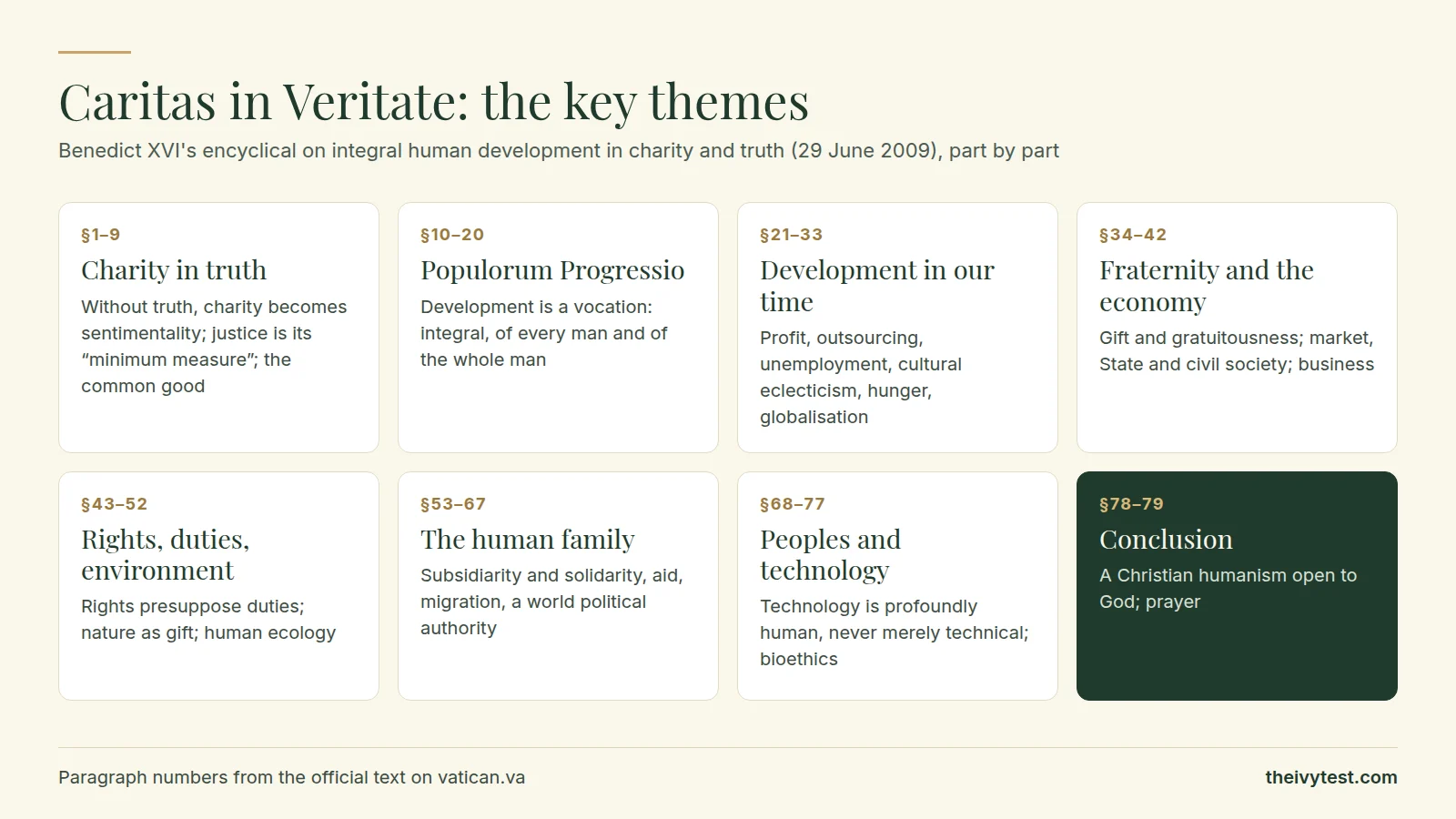
Paul VI hoped to rescue peoples "from hunger, deprivation, endemic diseases and illiteracy" (§21). Profit is useful as a means, but as the exclusive goal it "risks destroying wealth and creating poverty" (§21); the development he hoped for was "real growth, of benefit to everyone and genuinely sustainable" (§21), and the current crisis becomes "an opportunity for discernment" (§21). The world's wealth grows, "but inequalities are on the increase" (§22), and the State's sovereignty is limited by the new context of international trade and finance, so its role must be re-evaluated (§24).
The search for places to outsource production at low cost has led to "a downsizing of social security systems" (§25); prolonged unemployment undermines the freedom and creativity of the person, and "the primary capital to be safeguarded and valued is man" (§25). On the cultural plane there is a twofold danger: a "cultural eclecticism" that treats cultures as equivalent and interchangeable, and "cultural levelling" (§26). Hunger depends less on a lack of material things than on a shortage of social resources, above all institutional ones, and food and water are universal rights (§27). "Openness to life is at the centre of true development" (§28), and the denial of religious freedom, by fanaticism or by practical atheism, obstructs it (§29).
"Deeds without knowledge are blind, and knowledge without love is sterile" (§30): development needs the disciplines to work together (§31), and access to steady employment for everyone remains a priority (§32). Globalisation, the principal new feature since Paul VI, is "a great opportunity", but without charity in truth it "could cause unprecedented damage and create new divisions within the human family" (§33).